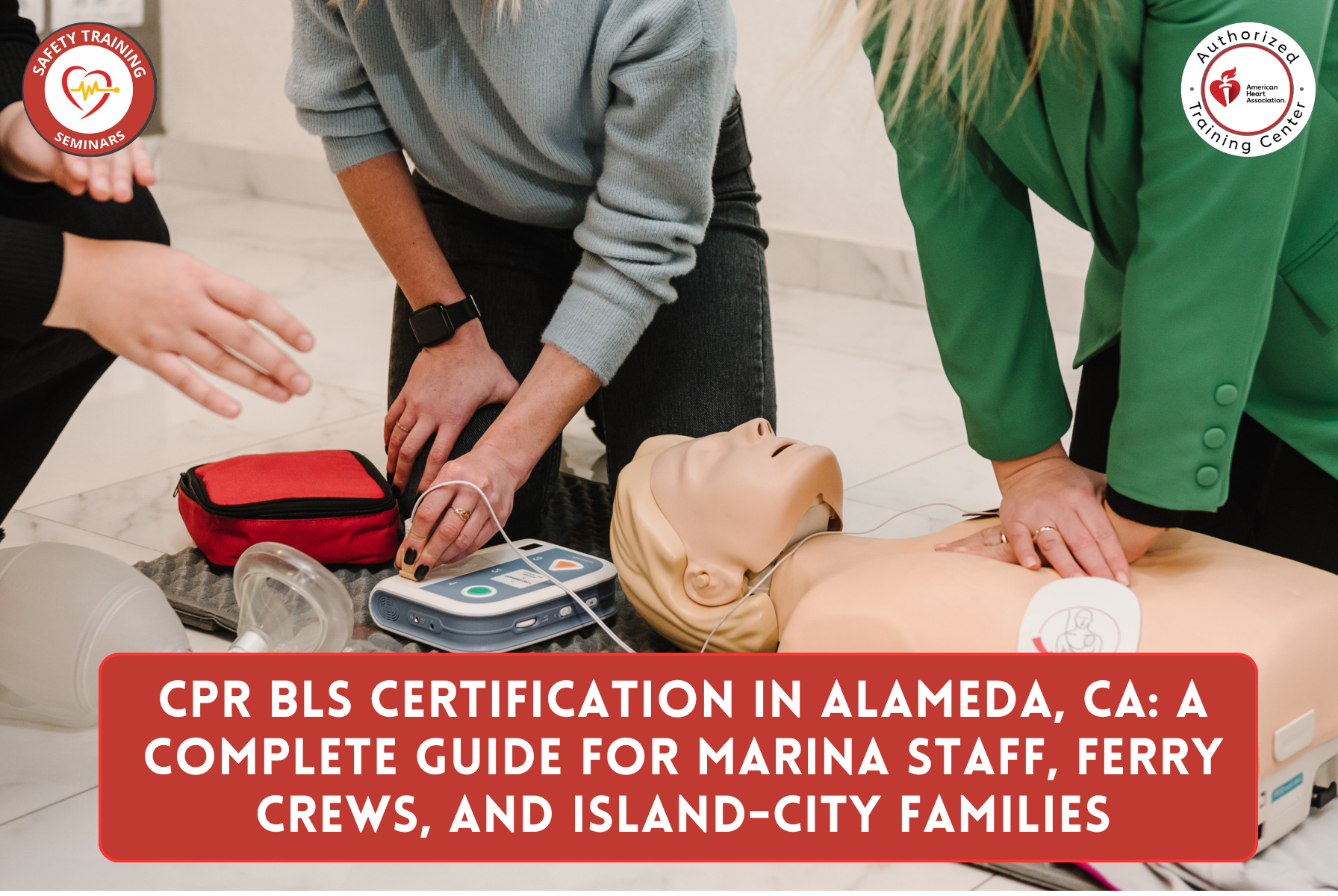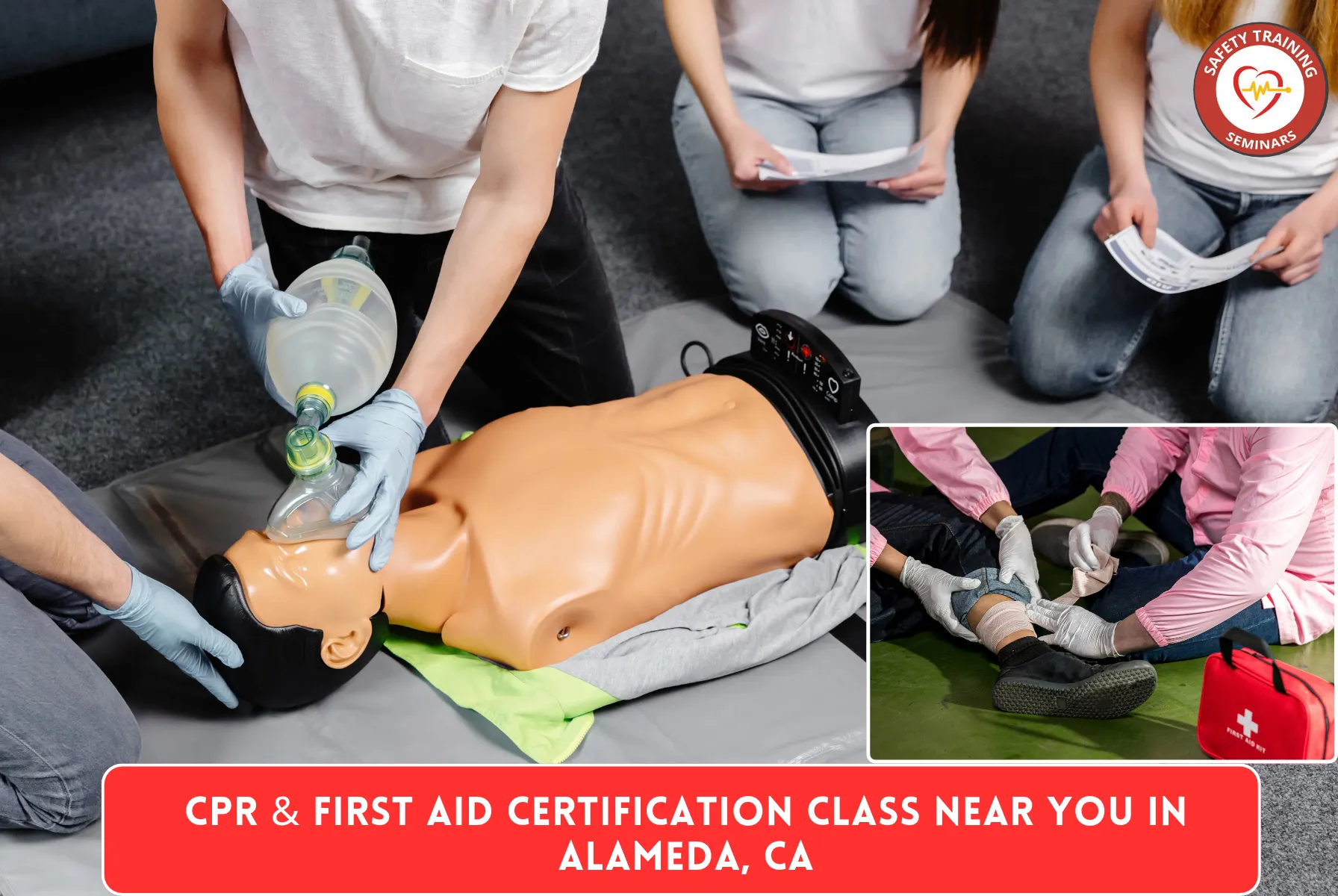
Finding a CPR & First Aid Certification Class near you in Alameda, CA, starts with choosing training that matches your workplace, school, or personal needs. Safety Training Seminars offers CPR and First Aid training options at its Alameda location, 2059 Clinton Avenue, Suite 2F, Alameda, CA 94501. The courses are relevant to parents, childcare providers, teachers, workplace employees, fitness professionals, and people who want to develop practical emergency response skills. Before registering, check whether you need CPR and AED training, a combined First Aid and CPR course, or healthcare-provider Basic Life Support (BLS). Reviewing the course format, hands-on requirements, and completion documentation will help you choose the right option.
Where Can You Find CPR and First Aid Classes Near You In Alameda, CA?
Alameda residents can explore local CPR and First Aid training through Safety Training Seminars. Its listed training location at 2059 Clinton Avenue, Suite 2F, Alameda, CA 94501, serves individuals looking for emergency response education in Alameda and the surrounding East Bay communities.
For course details and registration information, visit the CPR and First Aid Certification Class in Alameda page. Review the available course descriptions before selecting a session, particularly if you need a specific American Heart Association course completion card for employment or school.
The Alameda location may also be relevant to people traveling from nearby communities, including Oakland, San Leandro, Berkeley, and Emeryville. Rather than choosing a course based only on the city name, confirm the actual training address, available dates, and required completion steps.
What Should You Check Before Registering?
Before booking your CPR and First Aid class, consider these practical questions:
- Course requirements: Does your employer, school, or organization require CPR and AED training, First Aid and CPR, or BLS?
- Training format: Do you prefer classroom-based learning or a self-guided option that combines online learning with an in-person skills session?
- Skills assessment: Does the course require you to demonstrate CPR, AED use, or other practical skills?
- Completion documentation: Will you receive the specific AHA Course Completion eCard required for your intended purpose?
- Scheduling: Are the available sessions compatible with your work, study, or family commitments?
These checks are especially important for healthcare students, childcare professionals, and employees who must meet specific workplace training requirements.
What Does CPR and First Aid Training Cover?
CPR and First Aid training teaches participants how to recognize emergencies, respond appropriately, and provide initial assistance while emergency services are contacted.
The exact subjects depend on the course selected. For example, the American Heart Association’s Heartsaver First Aid CPR AED course combines First Aid education with CPR and automated external defibrillator (AED) skills.
Cardiopulmonary Resuscitation (CPR)
CPR is an emergency response technique used when someone experiences cardiac arrest. Training explains how to recognize when a person may need CPR and how to perform chest compressions and, where included, rescue breaths.
Depending on the course, participants may learn skills for responding to emergencies involving adults, children, and infants.
Automated External Defibrillator (AED) Use
An AED analyzes a person’s heart rhythm and can advise when a shock is needed. CPR and AED courses teach participants how to use the device safely and follow its prompts during a cardiac emergency.
Learning these skills is relevant in workplaces, schools, gyms, childcare settings, and community spaces where an AED may be available.
Choking Emergencies
Participants learn how to recognize choking and respond appropriately. The specific techniques covered depend on the selected course and the age of the person experiencing the emergency.
Courses that include pediatric skills can be particularly relevant to parents, babysitters, childcare staff, and people who regularly care for young children.
First Aid for Injuries and Sudden Illnesses
A combined First Aid and CPR course may cover initial responses to situations such as:
- Bleeding and common injuries
- Burns and other injury-related emergencies
- Sprains and suspected fractures
- Heat-related illnesses
- Allergic reactions and other sudden medical problems
- Recognizing when emergency medical services are needed
Course coverage varies, so review the official description rather than assuming every topic is included in every program.
The goal is to help participants recognize an emergency, take appropriate initial action, and understand when professional medical assistance is necessary.
CPR vs. CPR and First Aid vs. BLS: Which Course Do You Need?
Not everyone looking for CPR training needs the same course. The right choice depends on the intended use of the training and the requirements of the organization requesting it.
| Course type | Main focus | Who may need it |
| CPR and AED | CPR skills, emergency recognition, and AED use | Individuals who need CPR training or want to prepare for cardiac emergencies |
| CPR and First Aid | CPR, AED use, and initial care for injuries and medical emergencies | Parents, teachers, childcare providers, workplace employees, coaches, and community members |
| Basic Life Support (BLS) | CPR and other essential resuscitation skills for healthcare-provider settings, including team-based emergency response | Healthcare professionals and students whose employer, school, or clinical placement requires BLS |
When Is CPR and First Aid the Right Choice?
A combined CPR and First Aid course may be appropriate if you work in a school, childcare center, fitness facility, office, or another environment where both cardiac emergencies and other injuries are concerns.
It can also be a useful option for parents and caregivers who want practical emergency response knowledge for everyday situations.
When Should You Choose BLS?
BLS is intended for healthcare-provider training needs and covers skills relevant to responding to life-threatening emergencies in clinical and other healthcare settings.
Healthcare employees, nursing students, and people preparing for clinical placements should check their specific requirements before enrolling. A general CPR and First Aid course does not automatically satisfy a BLS requirement.
The American Heart Association provides information about its CPR and First Aid course options, which can help you compare available training pathways.
Who Should Consider CPR and First Aid Training in Alameda?
CPR and First Aid training can benefit people in a variety of personal, educational, and professional settings throughout Alameda.
Parents, Guardians, and Caregivers
Parents and caregivers may want to learn how to respond to choking, breathing emergencies, cardiac arrest, and common injuries. A course that includes pediatric CPR and First Aid may be particularly useful for people caring for infants and children.
Before registering, confirm that the selected course includes the age groups and skills relevant to your needs.
Teachers and Childcare Professionals
Teachers, childcare providers, and school staff may encounter situations requiring an immediate response before emergency medical services arrive.
Training that covers CPR, AED use, and First Aid can help staff prepare for potential emergencies involving children or adults. Childcare employees should also verify any applicable California requirements and the specific training documentation their employer requires.
Workplace Employees and Safety Teams
Businesses may need employees trained to respond to workplace injuries and medical emergencies. Depending on the working environment, this may include offices, construction sites, gyms, warehouses, hospitality businesses, and other workplaces.
Employers should identify the required course before booking training for individual employees or an entire team. The appropriate choice may be CPR and AED, combined First Aid and CPR, or another program based on the organization’s needs.
Healthcare Professionals and Students
Alameda has a local healthcare and education environment that makes course selection especially relevant for people preparing for healthcare-related work.
For example, Alameda Hospital provides emergency and other healthcare services to the local community. Meanwhile, College of Alameda offers health professions and occupations programs. Their presence illustrates why residents may seek relevant emergency response education, but it does not establish that either institution requires or endorses a particular Safety Training Seminars course.
Healthcare professionals and students should confirm requirements directly with their employer, academic program, or clinical placement coordinator. If BLS or another healthcare-specific course is required, choose that course rather than assuming a general First Aid program will meet the requirement.
Coaches, Fitness Professionals, and Community Members
Coaches, personal trainers, recreation staff, and other community members may work in environments where physical activity, outdoor conditions, or everyday accidents create a need for emergency preparedness.
CPR and First Aid training can help these individuals understand how to recognize an emergency and provide appropriate initial assistance.
How Alameda’s Local Healthcare and Education Environment Makes Training Relevant
Alameda is part of the East Bay, with connections to neighboring communities such as Oakland, San Leandro, Berkeley, and Emeryville. Residents may look for training that fits their commute, work schedule, school commitments, or employer requirements.
Local healthcare and educational institutions also give readers useful context when evaluating their training needs.
Alameda Hospital is a local healthcare facility with emergency services. For people working in or preparing for healthcare roles, its presence reinforces the importance of understanding the distinction between general emergency preparedness courses and healthcare-provider training.
In nearby Oakland, UCSF Benioff Children’s Hospital Oakland operates a pediatric emergency department and provides specialized care for children. This is relevant context for parents, childcare professionals, and people interested in pediatric emergency preparedness. It does not mean that the hospital is affiliated with or endorses Safety Training Seminars.
College of Alameda is another relevant local institution for students exploring healthcare-related education. Students should review their program’s requirements early, particularly when CPR or BLS documentation is needed before a practical placement or other academic milestone.
For anyone living in Alameda or the surrounding East Bay, the most useful approach is to select a course based on the actual skills and completion documentation required, then compare the available training locations and schedules.
What Training Formats Are Available?
The American Heart Association offers several Heartsaver course formats, including classroom-based learning, blended learning, and Self-Guided Learning™. Availability varies by course and training center.
Safety Training Seminars lists a Self-Guided Learning™ option involving online learning and an in-person skills session at a CPR Verification Station™ learning center. Check the current Alameda course listing to confirm that this option is available for the specific First Aid and CPR course you intend to take.
Classroom-Based Learning
Classroom-based training combines course instruction with practical skills activities. This format may suit learners who prefer to work through the material in a structured setting.
Before registering, check the course duration, session schedule, and skills requirements.
Blended Learning
Blended learning combines a self-paced online component with a required in-person skills session, where applicable.
This approach may be useful for people who want flexibility when completing the learning portion while still meeting the course’s practical skills requirements.
Self-Guided Learning™
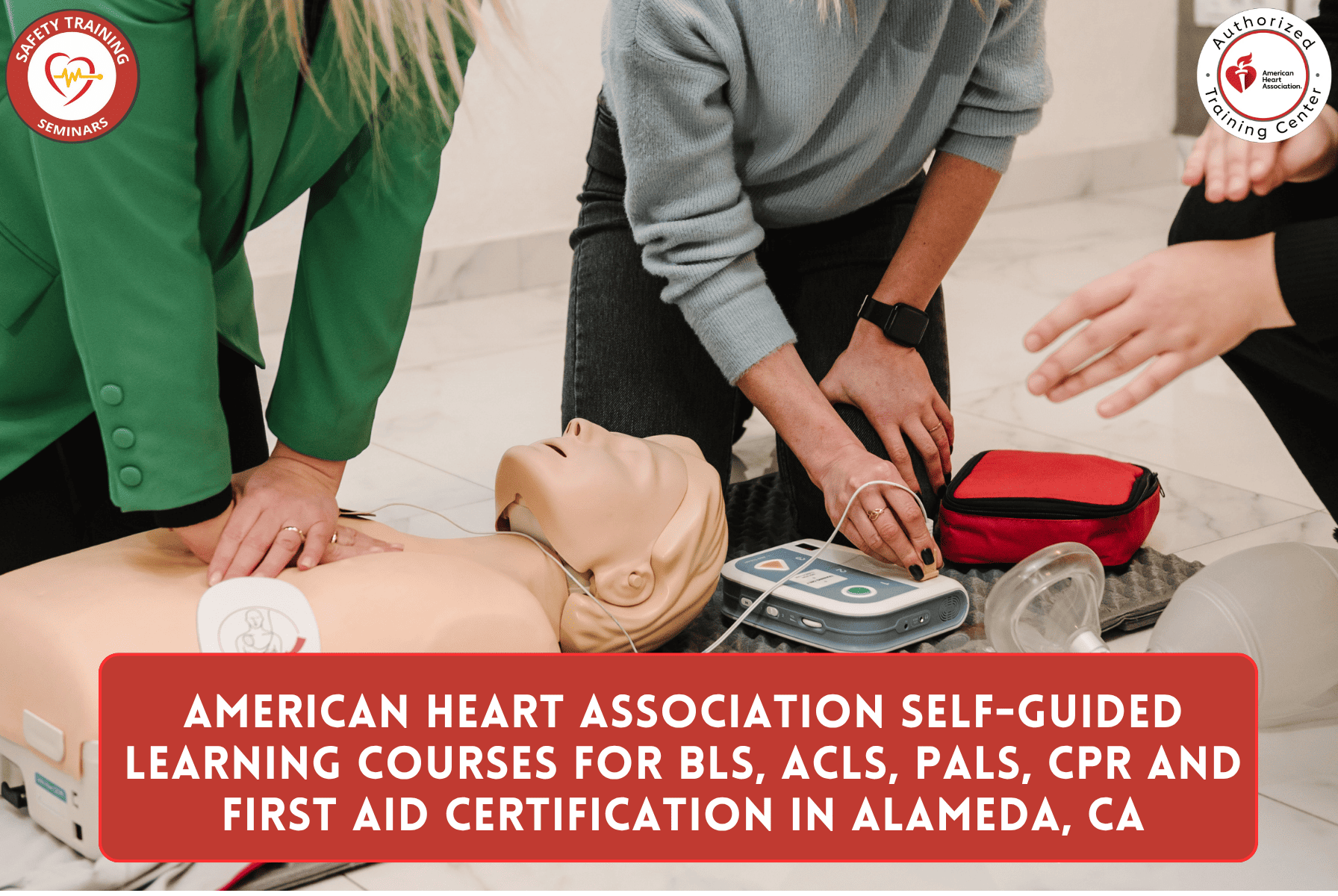
Self-Guided Learning™ combines online learning with an in-person skills session using an appropriate CPR Verification Station™ learning center.
The online component may use True Adaptive™ learning powered by Area9 Lyceum, depending on the applicable course. Participants must complete the required online learning and skills components to qualify for the relevant course completion documentation.
Do not assume that every CPR and First Aid course uses the same format. Confirm the specific course details, practical requirements, and completion process before enrolling.
How to Choose the Right CPR and First Aid Course
Choosing a course becomes easier when you start with the reason you need the training.
- Identify your purpose. Determine whether you need training for personal preparedness, a workplace requirement, childcare responsibilities, or a healthcare-related role.
- Confirm the required course. Ask your employer, school, or organization whether it requires CPR and AED, First Aid CPR AED, BLS, or another specific program.
- Review the skills covered. Check whether the course includes adult, child, and infant CPR, AED use, choking response, and First Aid topics relevant to your needs.
- Check the format. Decide whether classroom-based, blended, or self-guided learning is suitable, and verify which formats are available at the Alameda location.
- Understand the completion requirements. Determine whether an online component, an in-person skills session, or a practical assessment is required.
- Verify the course completion documentation. If your organization requests an AHA Course Completion eCard, confirm that the selected course provides the specific documentation you need after successful completion.
- Check renewal timing. If you already hold a course completion card, ask your employer or training provider when you need to renew and which course applies to your situation.
Taking these steps can help prevent registering for a course that does not meet your actual requirements.
Enroll in a CPR and First Aid Certification Course in Alameda, CA
Safety Training Seminars provides CPR and First Aid training options for individuals seeking emergency response skills in Alameda and the surrounding East Bay area.
The listed Alameda training location is:
Safety Training Seminars : 2059 Clinton Avenue, Suite 2F, Alameda, CA 94501
To review the available courses and registration information, visit the CPR and First Aid training course in Alameda.
Before completing your registration, confirm the course type, current availability, learning format, practical skills requirements, and completion documentation. If the training is for employment, school, or a clinical placement, verify that the selected course meets the relevant organization’s requirements.
Choosing the appropriate CPR and First Aid course is a practical step toward building emergency response knowledge that can be useful at home, at work, and throughout the Alameda community.
Frequently Asked Questions
Where can I find a CPR and First Aid certification class near me in Alameda, CA?
Safety Training Seminars lists a training location at 2059 Clinton Avenue, Suite 2F, Alameda, CA 94501. Visit its Alameda course page to review the available programs, registration details, and completion requirements.
What is the difference between CPR training and CPR and First Aid training?
CPR training focuses on resuscitation skills and may include AED use and choking response. A combined CPR and First Aid course also covers initial responses to selected injuries and sudden illnesses. The exact subjects depend on the course.
Is BLS the same as a general CPR and First Aid course?
No. BLS is designed for healthcare-provider training needs and includes essential resuscitation skills relevant to clinical settings. A general CPR and First Aid course does not automatically meet a BLS requirement.
Can I complete part of my training online?
Some American Heart Association courses offer blended or Self-Guided Learning™ formats that combine online learning with an in-person skills session. Options vary by course and training center, so confirm the format before registering.
Will I receive an AHA Course Completion eCard?
The applicable course determines the completion documentation. If you need an AHA Course Completion eCard, verify that the selected course provides it upon successful completion of all required components.
How do I know whether my employer will accept the course?
Ask your employer or organization which course and completion documentation it requires. Do not assume that all CPR and First Aid programs meet the same workplace, school, or professional requirements.
Do Alameda residents need to travel to another city for CPR training?
Safety Training Seminars lists an Alameda training location at 2059 Clinton Avenue, Suite 2F. Check the current location and course schedule before registering, especially if you are comparing options in Alameda, Oakland, San Leandro, Berkeley, or other East Bay communities.